
7 reasons people are throwing out their melatonin.
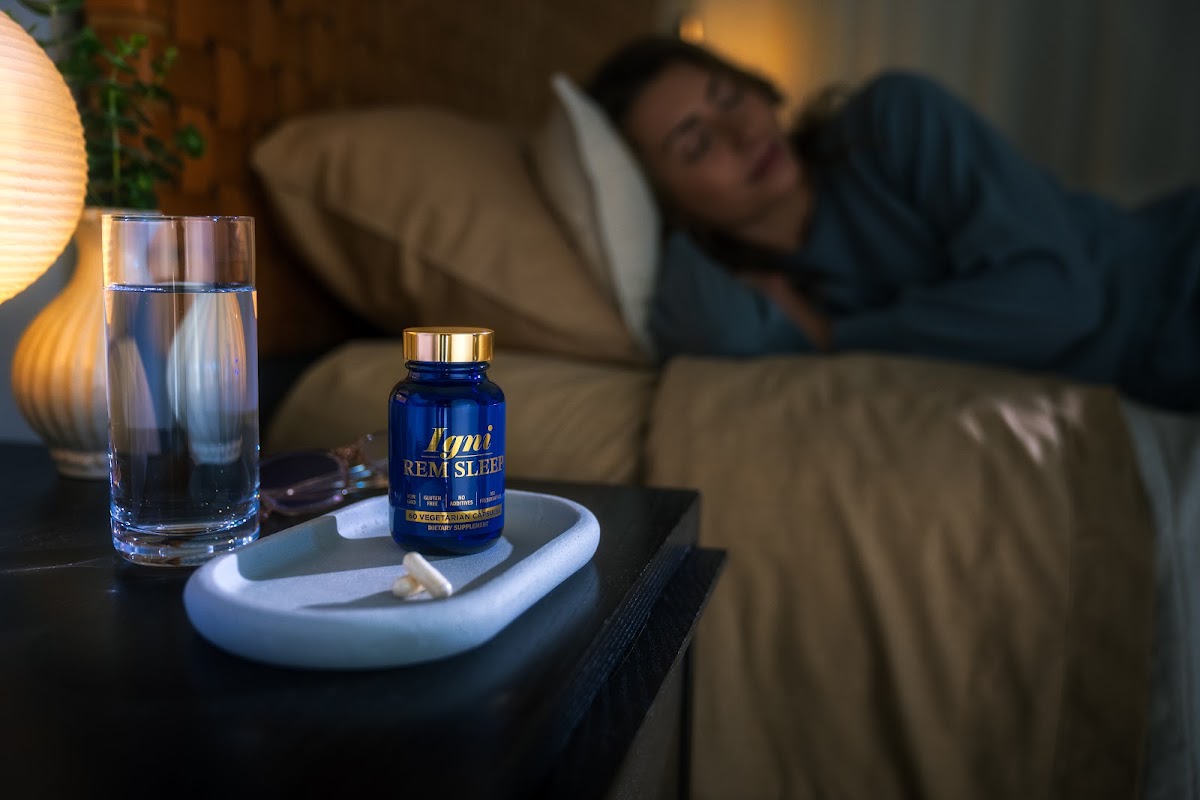
Melatonin is the most popular sleep supplement in America. It's also the most misunderstood — and the misunderstanding is costing people the exact thing they're buying it for.
Because here's what almost nobody realizes: melatonin was never a sleep-quality supplement. It's a timing signal. And the reason you can take it, sleep eight hours, and still wake up wrecked is that timing was never your problem.
Your problem lives one layer deeper — in a sleep stage most people can now measure on their own wrist. Here are the 7 reasons a growing number of people are quietly retiring the little white bottle.
The 7 reasons
- Melatonin is a clock, not a battery charger
- The reason 8 hours can still feel like 5
- Morning grogginess isn't sleep. It's a chemical hangover.
- Why your sleep aid works less every month
- You don't need a hormone. You need its raw materials.
- The study detail that changes how you read the 24.6%**
- The one sleep supplement your own tracker can fact-check
1Melatonin is a clock, not a battery charger
Melatonin is a hormone your brain releases as light fades. Its entire job is to tell your body "night has started" — to set the clock, not to run the recovery. Taking it as a pill mostly moves the hands of that clock forward.
That's genuinely useful for jet lag or a shifted schedule. But if you're already falling asleep and still waking up tired, you were never short on the "when." You're short on the "how deep." It's why people keep raising the dose and keep waking up flat: they're turning a volume knob that was never connected to the thing they want.
2The reason 8 hours can still feel like 5
Sleep isn't one thing. You cycle through stages all night, and one of them — REM — is where much of the recovery happens: your brain consolidates the day's memories and files the emotional charge off the events that rattled you.
Miss REM and you did the hours without the maintenance. That's the strange, specific exhaustion of sleeping a full night and waking up as if you'd argued with someone until dawn. Duration was fine. The stage that restores you got skipped.
3Morning grogginess isn't leftover sleep. It's a chemical hangover.
People assume morning fog means they didn't sleep enough. Often it means the sleep was chemically forced. High-dose melatonin, antihistamines (the "PM" in most nighttime pills), and sedatives don't deepen sleep — they sedate you, and your brain treats sedation as an override, not rest.
The override has a cost, and it gets charged to your morning. That thick-headed, underwater first hour is the compound clearing your system. You didn't sleep too little. You were knocked out, and now you're coming back up.
IgniREM Sleep contains none of the override chemistry:
- No melatonin
- No antihistamines or diphenhydramine
- No sedatives or benzodiazepines
It's designed to work with the transition into sleep instead of forcing it — which is why the mornings feel like mornings.
4Why your sleep aid works less every month
Ever notice that the pill that knocked you out in January barely touches you by June? That's not in your head — it's tolerance, and it's built into how sedating compounds work. Your brain adapts to the outside push by pushing back, so you need more to get the same effect. The dose creeps up; the sleep creeps down. That's the definition of habit-forming.
A formula that supplies the raw materials your own sleep system runs on works the opposite way. There's nothing to build tolerance to — you're supporting your own machinery, not overriding it. Which is why many people report the effect holds or deepens with consistent use rather than fading.
5You don't need a hormone. You need its raw materials.
Here's the shift most people never make: a melatonin pill hands your body one finished hormone and hopes it's the missing piece. But sleep isn't run by one molecule — it's a cascade, and each step needs its own input.
IgniREM Sleep supplies inputs across that cascade, including the precursors your body uses to make its own serotonin and melatonin on its own schedule:
Notice the difference in philosophy: melatonin overrides the system from outside; this feeds the system so it runs itself.
6The study detail that changes how you read the 24.6%**
Any brand can claim more REM. The number that makes it real is the one next to it — what the placebo group did over the same window.
A 21-day study: 60 adults aged 40 to 76, a 7-day baseline week, then split into the Igniton-charged formula vs. placebo for 14 days.
A study of Igniton-enhanced amino acid compositions on REM sleep (60 adults, ages 40–76; REM measured by sleep-tracking ring; REM rose from 21% to 26% of total sleep in the enhanced group). See the research →
The placebo group didn't just fail to improve — their REM went down over the two weeks. That's the more honest read of the result: the gap between the two groups is wider than the 24.6% alone suggests, because one line went up while the other went down.
7The one sleep supplement your own tracker can fact-check
This is the part no melatonin brand can offer, because their mechanism doesn't show up on the metric you already track. REM does. If you own an Oura, a Whoop, an Apple Watch, or any sleep tracker, you already have the instrument.
And if the line doesn't move and the mornings don't change within 30 days, take the refund. It's the rare sleep product that invites you to check its homework.
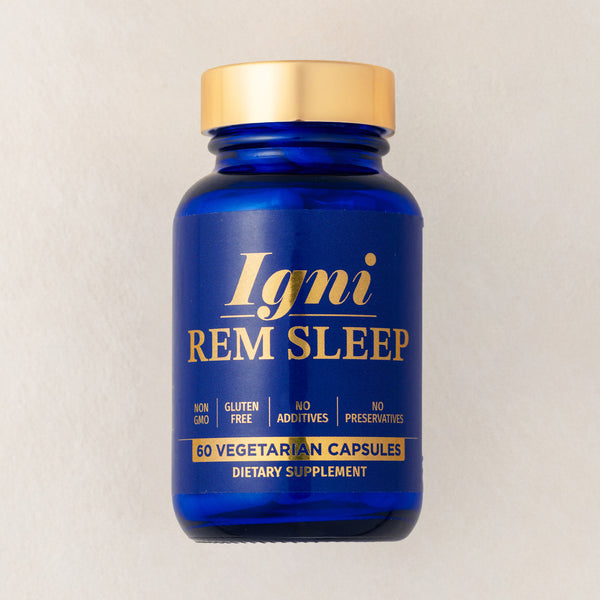
IgniREM Sleep™
Eight studied sleep compounds, quantum-charged. In a study, the charged formula increased REM sleep 24.6% over 14 days, while the placebo group's REM declined.** No melatonin. No grogginess.
Subscribe & Save — $169.15/mo15% off · cancel anytime · one-time $199
Subscribe & Save →30-day money-back guarantee · Free US shipping on 2+ bottles
Don't sleep longer. Recover deeper.
2 capsules, 1 hour before bed. Non-habit-forming. Measurable on your own tracker, backed by a 30-day guarantee.
See the Formula →