
7 things people over 40 wish they knew before their next brain supplement
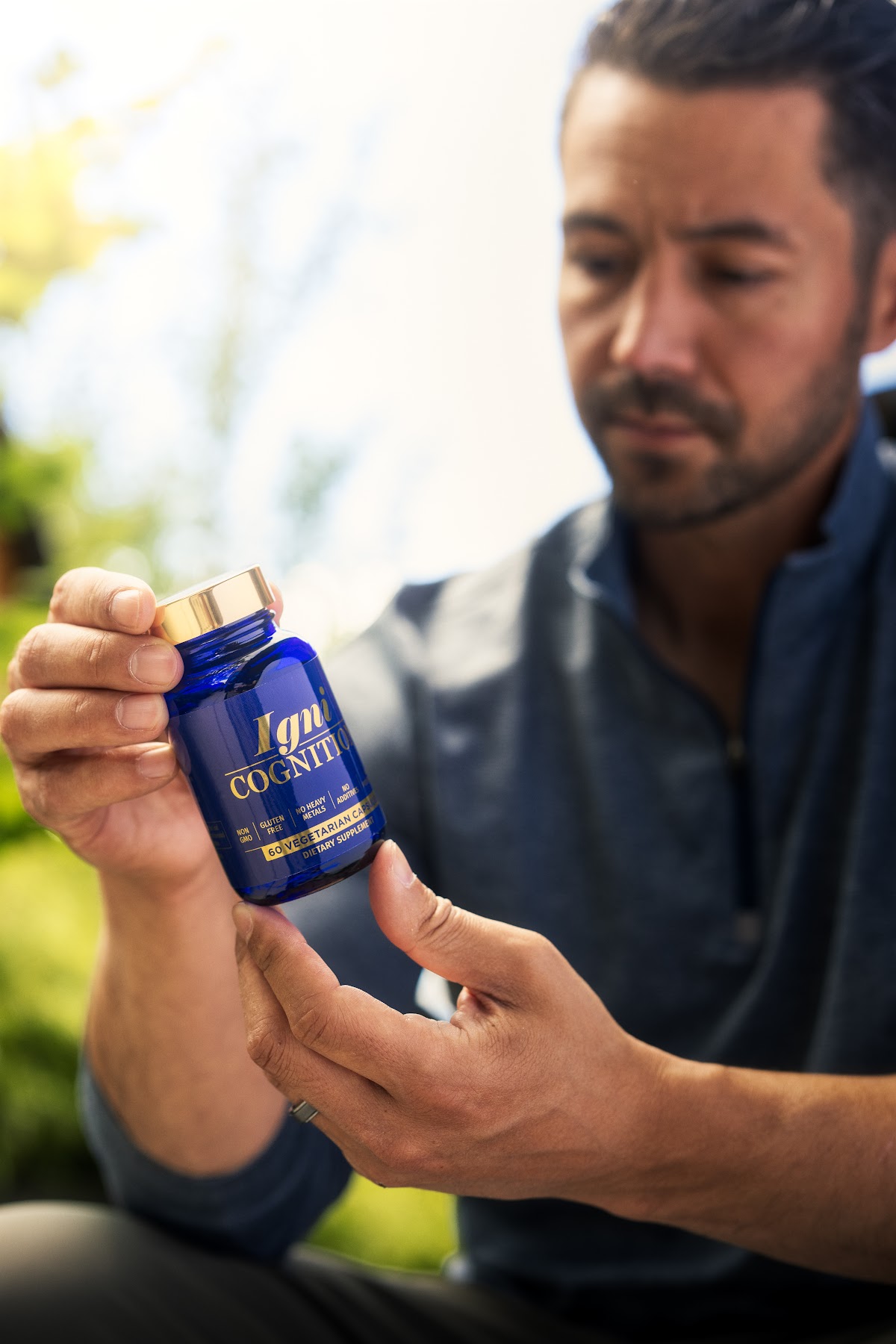
In a 90-day study at Concordia University, researchers did something supplement companies almost never allow: they tested a brain formula against its own identical twin.
Three groups. One took the formula. One took the exact same ingredients without one processing step. One took a placebo.
The twin without that step performed like an ordinary supplement. The full formula didn't.** Understanding why requires knowing a few things about your brain that nobody selling you supplements tends to explain.
The 7 things
- Why supplement companies never run the one test that matters
- Your "senior moments" are mostly retrieval failures — and retrieval runs on a fuel you're probably low on
- Caffeine never gave you energy. It hid a signal.
- Swallowing an ingredient is not the same as absorbing it
- What +51% attention actually looks like in a normal day**
- The quiet meaning of "other ingredients" on a label
- Why the guarantee is set at exactly 30 days
1Why supplement companies never run the one test that matters
Here's something most people never think about: when a supplement brand cites "studies," they're almost always citing studies on the raw ingredients, done by someone else, on someone else's formulation. The brand never tests its own bottle. And there's a reason.
If you tested most finished formulas against their own ingredient list, you'd get a tie. The formula IS the ingredient list. There's nothing else in there to test.
That's what makes the Concordia design unusual. The researchers built a three-arm study: the Igniton-charged formula, the identical formula without the charge, and a placebo. If the charge did nothing, the study would show the product is ordinary.
The enhanced group showed substantially greater improvements in memory, attention, and reaction speed than its uncharged twin.**
Source: university study published in a peer-reviewed journal (Valverde et al., 2023). Read the study →
2Your "senior moments" are mostly retrieval failures — and retrieval runs on a fuel you're probably low on
Notice what actually happens when you blank on a name mid-sentence. Hours later, in the shower, the name arrives on its own. Which tells you something important: the memory was never gone. It was stored fine. What failed was retrieval — the fetching mechanism.
Retrieval runs largely on a neurotransmitter called acetylcholine. Your brain manufactures it on demand from choline, and here's the part almost nobody knows: the brain barely stores choline. It needs a steady incoming supply, and many adult diets fall short of recommended choline intake. Eggs and liver are the richest sources; how often do you eat liver?
So the fog you filed under "getting older" may be partly a supply-chain problem: same brain, same memories, underfueled fetching system. That's why IgniCognition leads with Citicoline and Alpha-GPC, two of the most studied choline sources, alongside tyrosine and phosphatidylserine.
3Caffeine never gave you energy. It hid a signal.
Most people believe coffee adds energy. Chemically, it can't. Caffeine doesn't put anything into the tank; it blocks adenosine, the molecule your brain uses to signal "you're running low."
The adenosine doesn't go away while it's blocked. It accumulates. When the caffeine wears off around mid-afternoon, all of it lands at once. That's your 3pm crash: not a lack of coffee, but the bill arriving.
That's the difference in kind between stimulants and substrates. Stimulants mute signals. Substrates — the choline, the tyrosine, the CoQ10 and NADH your cells burn to make ATP — restock what thinking actually spends. Nothing to wear off, nothing to crash from, which is why IgniCognition contains no caffeine at all and still stacks fine with your morning cup.

4Swallowing an ingredient is not the same as absorbing it
You've probably heard the joke that supplements make "expensive urine." It's dark humor with a real mechanism behind it: a meaningful share of what you swallow never reaches the cells that need it. Dose on the label ≠ dose delivered.
The entire supplement industry attacks this the same way: bigger doses, fancier coatings. Igniton attacks it from physics instead. Their cold-plasma process is designed to embed quantum quasi-particles — ignitons — into the ingredient molecules. Same compound, different energetic state. You are roughly 70% water and your cells signal electrochemically; the charged state is designed to be the one your cells recognize faster.** (That "why" is Igniton's framework; what was measured is below.)
5What +51% attention actually looks like in a normal day**
Study numbers are abstract until you translate them. The published study measured at baseline, 30, 60, and 90 days:
Igniton-enhanced group, university study published in a peer-reviewed journal — 90-day, placebo-controlled, 80 adults aged 35–65 (Valverde et al., 2023). Read the study →
Translated out of study language: "attention" is hour three of the meeting, still holding the thread. "Operational memory" is carrying a phone number in your head while you hunt for a pen. These are the scores that decide whether your afternoon is productive or a slow drift between tabs.
6The quiet meaning of "other ingredients" on a label
Flip over any budget supplement and find the small print that says "other ingredients." That's where the economics live: flow agents so powder runs through machines faster, bulking fillers so a small dose looks like a full capsule, dyes so the batch looks uniform.
None of it is there for you. It's there because hitting a $25 price point requires it. The cheaper the bottle, the more of the capsule is machinery lubricant.
IgniCognition's label doesn't do that work: no fillers, no dyes, no preservatives — non-GMO, gluten-free, vegan. That's also part of why it isn't a $25 bottle.
7Why the guarantee is set at exactly 30 days
Guarantee windows are usually set by marketing. This one was set by the data: day 30 is where the study's first measurable cognitive gains landed. Judging the formula in week one is measuring a building at the foundation stage.
So the deal mirrors the science: take it consistently for 30 days. If you don't notice a meaningful difference in focus, recall, or clarity, full refund, no hoops. The company holds the risk during exactly the window the evidence says the difference shows up.
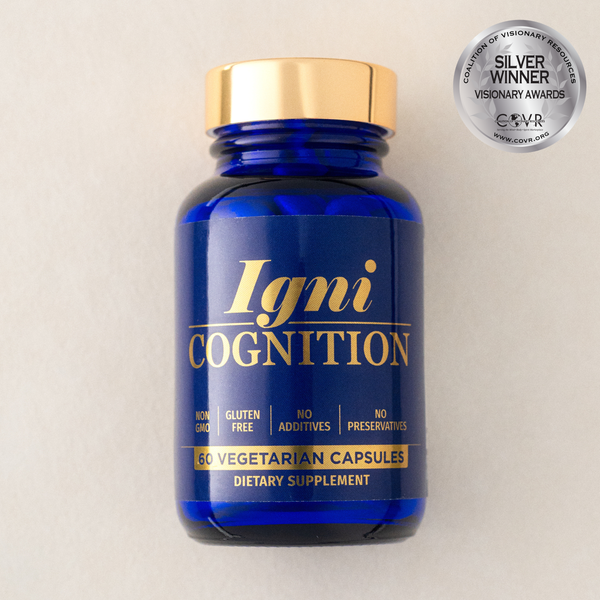
IgniCognition™
University-studied compounds, quantum-charged, validated against placebo and against the identical unenhanced formula in a university study published in a peer-reviewed journal.**
Subscribe & Save — $169.15/mo15% off · cancel anytime · one-time $199
Subscribe & Save →30-day money-back guarantee · Free US shipping on 2+ bottles
The thinking of your best decade. Measured.
2 capsules in the morning. No stimulants. Results you can check at day 30, backed by a guarantee that starts where the study data does.
See the Formula →