The Igniton Journal · Science
Beyond the Ingredients: How Igniton Is Advancing the science of nutritional supplementation.
Three peer-reviewed publications, decades of research in advanced physics, and a novel approach to enhancing established nutritional compounds are opening a new conversation about cognitive performance, cellular health, restorative sleep, and the future of supplementation.
For much of the past century, the science of nutritional supplementation has followed a familiar path. Researchers identify a compound with biological activity, investigate how it interacts with the body, determine an effective dose, and explore whether combining it with other ingredients produces additional benefits. This approach has given us a substantial body of knowledge about nutrients that support brain function, cellular metabolism, antioxidant defenses, and healthy aging. Yet despite these advances, one fundamental assumption has remained largely unchanged: the effectiveness of a supplement depends primarily on which ingredients it contains and how much of each ingredient is delivered.
Igniton™, a Colorado-based quantum wellness technology company, is challenging that assumption. Rather than simply introducing another combination of familiar ingredients, the company has developed a proprietary process designed to enhance the biological performance of established nutritional compounds. The technology, which originated in advanced physics research during the 1990s, uses specialized laser photonics and cold-plasma systems to process active ingredients with ignitons, a class of neutral subatomic quasi-particles.
The significance of this approach extends beyond its unusual technological origins. Three peer-reviewed journal publications have reported measurable improvements in cognitive performance and physiological stress markers among people taking igniton-enhanced nutritional formulations. Two of those studies compared enhanced formulations with identical, non-enhanced versions, creating an opportunity to examine the contribution of the enhancement process itself. Igniton's research materials published in peer-reviewed journals show improvements averaging 24–39% beyond the performance of the same ingredients without enhancement (calculated using the published study tables).
For healthcare practitioners accustomed to evaluating nutritional products according to their ingredients, dosages, and supporting literature, the research introduces an intriguing additional consideration: the possibility that the way a supplement is physically processed can influence its biological activity.
A different approach to nutritional science
Same ingredients. A different process.
The foundation of Igniton's approach is the recognition that many nutritional compounds already have well-characterized roles in human physiology. Citicoline and Alpha-GPC, for example, contribute to choline availability and neurotransmitter metabolism. Coenzyme Q10 and NADH participate in cellular energy production, while resveratrol, glutathione, and PQQ are involved in pathways associated with oxidative balance and cellular protection. These are not unfamiliar substances in integrative medicine, and the literature examining their individual properties is extensive.
Igniton's research materials identify 64 foundational peer-reviewed studies supporting the ingredients used across its formulations. Rather than replacing these compounds with novel synthetic substances, the company has concentrated on developing a process intended to increase their effectiveness while retaining the underlying nutritional formulations.
The technology involves a sophisticated manufacturing environment incorporating high-vacuum cold-plasma chambers, laser systems, magnetic and radio-frequency controls, and specialized particle detection equipment. Its development traces back to privately conducted research using facilities and instrumentation associated with CERN in Switzerland during the 1990s. The company now operates its technology in Colorado.
Central to the process are ignitons, which are electrically neutral quasi-particles with properties related to those of neutrinos. Ignitons interact with molecular structures in a manner that can influence their energetic characteristics and biological activity. This framework forms the basis of its quantum-enhancement technology.
Cold plasma itself is well established in physics and has applications in fields ranging from materials engineering to food processing and biomedical research. Unlike conventional high-temperature plasma, cold plasma can be generated under conditions in which the overall gas temperature remains relatively low, even while electrons and other reactive constituents possess considerable energy. Researchers have demonstrated that plasma processing can modify the physical and chemical characteristics of exposed materials, making it an increasingly important area of investigation.
Igniton's work applies specialized plasma-processing technology to nutritional compounds, with the objective of improving the performance of ingredients whose biochemical functions are already understood. The company's published human studies offer an opportunity to examine whether this processing approach is associated with differences in measurable biological outcomes.
The way a supplement is physically processed may influence its biological activity.
What three peer-reviewed publications have found
Cognition, stress, and the enhancement comparison
The published research associated with Igniton includes three publications appearing between 2023 and 2025. Together, they examine cognitive performance, memory, attention, reaction speed, psychological stress, and several physiological biomarkers (such as IL-6, CRP, GGT and blood pressure). While the studies differ in design and duration, they share a focus on nutritional formulations processed using Igniton’s proprietary cold-plasma and laser photonics enhancement.
Researchers evaluated memory, attention, and reaction speed using computerized cognitive assessments administered at baseline and at subsequent intervals. In the 90-day study, the 30-day results table reported a 100% improvement in overall memory for the enhanced group, compared with 20% for the non-enhanced group and 1% for placebo. Short-term memory improved by 28%, compared with 10% and 1%, respectively, while operational memory improved by 25%, compared with 14% and 8%. Attention improved by 51% in the enhanced group, compared with no improvement in the non-enhanced group and 9% in the placebo group. The researchers also reported an 83% improvement in quality of performance for the enhanced formulation, compared with 9% for the non-enhanced version and 39% for placebo.
These figures are particularly relevant because the enhanced and non-enhanced formulations contained the same active ingredients. The study therefore examined more than the familiar question of whether a particular nutritional blend supports cognitive function. It also investigated whether processing that blend differently was associated with a change in performance.
The authors observed that the enhanced formulation produced more substantial effects across several cognitive measures, although the timing varied by assessment. Some improvements became apparent within 30 days, while differences in other tests became more pronounced after 60 days. Certain cognitive benefits continued through the 90-day observation period.
Unlike the first cognition study, the COVID-19 investigation did not include an identical non-enhanced formulation group, so it does not independently quantify the additional effect of the enhancement process. Researchers did report improvements in attention-related measures, with the active-treatment groups generally performing better than placebo.
In the 2025 stress study, researchers measured blood pressure, heart rate variability, interleukin-6, C-reactive protein, gamma-glutamyl transferase, and stress-related parameters assessed through biofeedback and gas discharge visualization. Among participants taking the enhanced formulation, mean systolic blood pressure decreased from 127.7 to 118.0 mmHg (8% improvement), while diastolic blood pressure decreased from 79.6 to 72.1 mmHg (9% improvement). Interleukin-6 declined from 1.39 to 0.88 pg/mL (37% improvement), C-reactive protein decreased from 2.13 to 1.54 mg/L (28% improvement), and gamma-glutamyl transferase fell from 25.4 to 22.2 U/L (13% improvement). The publication reported statistically significant changes in these measures within the enhanced group, whereas most parameters in the non-enhanced and placebo groups did not show significant changes.
For practitioners, the inflammatory markers are especially interesting. Interleukin-6 is a cytokine involved in immune signaling and inflammatory responses, while C-reactive protein is a widely used marker of systemic inflammation. Changes in these biomarkers provide a different category of evidence from subjective wellness assessments, although their practical significance depends on the broader patient context and the strength of the controlled comparisons.
Taken together, the three publications describe measurable outcomes associated with igniton-enhanced nutritional formulations. The two matched-formulation studies are particularly important to Igniton's development strategy because they compare products with the same ingredients while varying the processing method. The findings provide a published basis for investigating whether enhancement can influence nutritional performance independently of ingredient selection.
The role of water
A clue to how enhancement may work
One of the more distinctive aspects of Igniton's research concerns water. Although the company's published studies focus on human outcomes, its technical investigations have also examined how water responds to the enhancement process. These observations form an important part of Igniton's proposed explanation for how physical processing might influence the behavior of nutritional compounds.
Water is far more than a passive carrier in biological systems. It provides the medium for most biochemical reactions, influences protein folding and molecular interactions, participates directly in metabolic processes, and helps determine the physical environment in which enzymes, membranes, and other cellular structures function. Changes in water's physical characteristics are therefore of considerable interest to researchers studying molecular behavior.
Igniton reports that its processing technology produces substantial changes in measurements obtained from water samples. Company materials describe increases of approximately 300% in measured water energy and improvements approaching 100% in symmetry. In one technical presentation, Bio-Well electro-photonic measurements increased from 55 to 140 millijoules following processing, while a reported inner-noise parameter decreased from 3,033 to 1.
The latter energy readings represent a near 3X increase over the original measurement. The significance of these observations lies in the proposed relationship between the physical characteristics of processed materials and their subsequent biological behavior. Igniton's working model suggests that its enhancement technology may influence molecular organization and interactions in ways that contribute to the performance of active ingredients.
The water findings also illustrate why Igniton's research extends beyond conventional supplement formulation. Its approach treats the physical processing of a substance as a potentially important variable in biological performance, rather than assuming that chemical composition alone determines the response.
IgniCognition: supporting brain performance
Neurotransmitters, membranes, and cellular energy
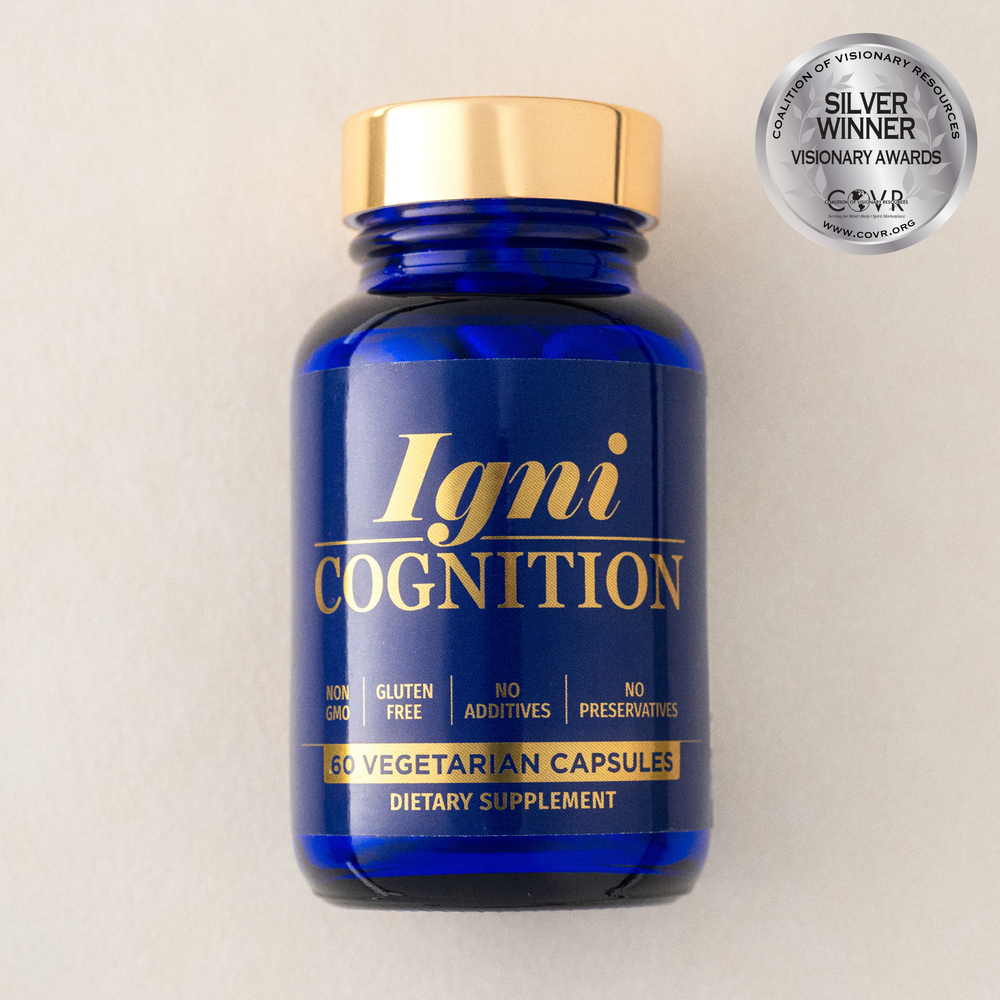
IgniCognition™ is the company's cognitive-support formulation, designed around six ingredients with complementary roles in neurological function and cellular metabolism. The formulation described in the 90-day cognitive study contains citicoline, Alpha-GPC, N-acetyl L-tyrosine, NADH, phosphatidylserine, and coenzyme Q10.
Citicoline and Alpha-GPC provide two sources of choline-related compounds, making them relevant to acetylcholine synthesis and neuronal membrane function. Acetylcholine is involved in learning, attention, and memory, while phospholipid metabolism contributes to the maintenance of healthy neuronal structures. Citicoline also participates in pathways associated with phosphatidylcholine synthesis, an important component of cell membranes.
N-acetyl L-tyrosine contributes a derivative of tyrosine, the amino acid precursor used in the synthesis of dopamine and norepinephrine. These neurotransmitters participate in attention, motivation, alertness, and the body's response to cognitively demanding circumstances. Although the availability and metabolism of N-acetyl L-tyrosine differ from those of free-form tyrosine, its inclusion reflects the formulation's attention to neurotransmitter-related pathways.
Phosphatidylserine is another component of neuronal membranes and has been studied for its relationship to cognitive function and memory. Its role in membrane structure and cellular signaling complements the choline-containing ingredients.
NADH and coenzyme Q10 address a different but equally important aspect of brain physiology: cellular energy production. NADH participates in oxidation-reduction reactions that support mitochondrial metabolism, while coenzyme Q10 functions within the mitochondrial electron transport chain. Because neuronal signaling requires substantial amounts of energy, normal mitochondrial activity is fundamental to cognitive performance.
The formulation therefore combines nutritional support for neurotransmitter metabolism, neuronal membrane integrity, and cellular energy production. Rather than depending on a single pathway, it brings together several biological processes that contribute to normal cognitive function — then enhances them with ignitons.
What distinguishes IgniCognition from conventional multi-ingredient nootropics is the additional enhancement process. In the published cognitive study, the enhanced formulation was associated with 39% stronger performance on average across several memory and attention measures than the same formulation without enhancement. For practitioners, this comparison is the central finding: the observed differences were not simply the result of using different ingredients or higher doses.
University studied vs the same ingredients
IgniCognition™
Six complementary ingredients for neurotransmitter metabolism, neuronal membranes, and cellular energy — then enhanced with ignitons. In the published 90-day study, the enhanced formula outperformed the identical non-enhanced formula by 39% on average.**
Explore IgniCognition →IgniLongevity: cellular metabolism and stress
Oxidative balance, NAD+, and resilience
IgniLongevity™ takes a similarly integrated approach to cellular health and physiological resilience. Its formulation contains eight ingredients: nicotinamide ribose, resveratrol, reduced glutathione, berberine, L-5-methyltetrahydrofolate, pyrroloquinoline quinone (PQQ), cycloastragenol, and BioPerine.
Nicotinamide ribose is a precursor of NAD+, a coenzyme essential to cellular energy metabolism and numerous regulatory processes. NAD+ participates in mitochondrial function and cellular signaling, and its relationship to aging has become an important subject of longevity research. Although increasing NAD+ availability does not itself establish an extension of human lifespan, the pathway remains relevant to investigations of metabolic health.
Resveratrol, a polyphenol found in grapes and other botanical sources, has been extensively studied for its antioxidant properties and effects on cellular signaling. Reduced glutathione complements this activity through its central role in intracellular redox balance and antioxidant defense. Together, these ingredients address processes involved in maintaining normal cellular function under oxidative stress.
Berberine contributes a different set of metabolic properties. This plant-derived alkaloid has been investigated for its effects on glucose metabolism, cellular signaling, and metabolic regulation. L-5-methyltetrahydrofolate, the biologically active form of folate, supports one-carbon metabolism, methylation, and normal DNA synthesis.
PQQ is a redox-active compound studied for its antioxidant properties and potential relationship to mitochondrial function. Cycloastragenol, a compound derived from Astragalus, has attracted research interest because of its relationship to telomerase-associated pathways and cellular aging. BioPerine, a standardized black pepper extract containing piperine, is included for its potential to influence the absorption and metabolism of other compounds.
The formulation brings together ingredients involved in mitochondrial metabolism, antioxidant defense, methylation, and cellular signaling — then enhances them using ignitons. These complementary pathways are relevant to the maintenance of physiological resilience, particularly in the context of age-related changes in metabolic function.
The 2025 peer-reviewed publication provides the most direct human evidence associated with this formulation, as the enhanced formulation outperformed the exact same, non-enhanced formulation by 24% on average. Its reported changes in interleukin-6, C-reactive protein, blood pressure, and other physiological measures offer an initial basis for investigating how the enhanced combination may support stress-related biological processes.
Matched-formula comparison · 24% stronger
IgniLongevity™
Eight ingredients spanning NAD+ metabolism, antioxidant defense, methylation, and cellular signaling — enhanced with ignitons. The 2025 publication reported statistically significant changes in the enhanced group that most non-enhanced and placebo parameters did not show.**
Explore IgniLongevity →IgniREM Sleep: restorative recovery
Neurotransmitter balance and cellular recovery
Sleep is one of the most important foundations of cognitive performance, metabolic regulation, and long-term physiological health. Yet it is frequently treated as a separate concern from the processes involved in memory, stress resilience, and cellular function. In reality, these systems are closely connected. Inadequate or disrupted sleep can affect attention, learning, emotional regulation, and the body's response to physiological stress, while sustained stress can interfere with the ability to fall asleep and maintain restorative sleep throughout the night.
IgniREM Sleep™ extends Igniton's nutritional approach into this essential area of wellness. The formulation combines eight ingredients — glycine, L-tryptophan, 5-hydroxytryptophan (5-HTP), taurine, gamma-aminobutyric acid (GABA), vitamin C, baicalin, and apigenin — selected for their roles in neurotransmitter metabolism, inhibitory signaling, antioxidant protection, and pathways associated with relaxation and sleep regulation.
The formulation is organized around several complementary aspects of sleep physiology rather than a single sedative pathway. Glycine, for example, is an amino acid that also functions as an inhibitory neurotransmitter in the central nervous system. It participates in neurological signaling and thermoregulation, both of which are relevant to normal sleep initiation. Small human studies have investigated glycine supplementation in relation to subjective sleep quality and next-day fatigue, making it an ingredient of interest in sleep-support formulations.
L-tryptophan and 5-HTP address another important aspect of sleep physiology: serotonin metabolism. L-tryptophan is an essential amino acid and a precursor of serotonin, which is subsequently involved in the body's production of melatonin. Melatonin plays a central role in circadian timing and the regulation of the sleep-wake cycle. 5-HTP is an intermediate in the conversion of tryptophan to serotonin, placing it within the same biochemical pathway. Together, these ingredients reflect an emphasis on the nutritional precursors involved in normal neurotransmitter and sleep-related hormonal function.
Taurine and GABA contribute a complementary focus on inhibitory neurotransmission and nervous-system regulation. GABA is the principal inhibitory neurotransmitter in the adult mammalian brain and plays an essential role in regulating neuronal excitability. GABAergic signaling is closely associated with the neural networks involved in relaxation and sleep. Taurine, a sulfur-containing amino acid derivative, also participates in neuromodulation, cellular osmoregulation, and membrane stabilization. Although oral GABA's ability to directly influence central nervous system activity remains an active area of investigation, its established physiological role provides a relevant foundation for understanding the formulation's design.
Baicalin and apigenin introduce botanical compounds with additional relevance to relaxation and neurological signaling. Baicalin is a flavonoid found in the roots of Scutellaria baicalensis, commonly known as Chinese skullcap. It has been studied for antioxidant activity and interactions with pathways involved in neuronal signaling and inflammatory regulation. Apigenin is another naturally occurring flavonoid found in plants including chamomile, parsley, and celery. It has attracted research interest for its interactions with GABA-related receptor systems and its potential relationship to relaxation and sleep. Much of the mechanistic evidence for these botanical compounds comes from laboratory and early-stage investigations, making human published research an important next step.
Vitamin C completes the formulation by contributing antioxidant support and participating in several essential biochemical reactions. Beyond its familiar role in protecting cells from oxidative stress, vitamin C serves as a cofactor in enzymatic processes involved in neurotransmitter synthesis. Its inclusion connects the formulation's neurological emphasis with the broader importance of maintaining normal cellular function.
Taken together, these eight ingredients, all enhanced using Igniton technology, provide a multi-pathway nutritional strategy addressing neurotransmitter precursors, inhibitory signaling, antioxidant defenses, and physiological processes associated with sleep. The formulation reflects an understanding that restorative sleep involves coordinated interactions among the nervous system, circadian biology, and cellular metabolism rather than a single biochemical switch.
Igniton's technical materials also include observations from a March 2024 evaluation of an IgniREM Sleep formulation. The assessment examined several dimensions of the sleep experience over 15 days compared to a 7-day base period, including sleep duration, nighttime interruptions, the ability to return to sleep after awakening, dream quality, and morning weakness. Results were a 25% increase in REM sleep time, 54% fewer sleep interruptions, 11X falling back asleep faster after waking up, and 92% less morning weakness; results that were all statistically stronger than placebo. These observations provide a foundation for exploring the company's sleep-focused technology.
For practitioners, the relationship between IgniREM Sleep and Igniton's other formulations is particularly relevant. Sleep plays an essential role in memory consolidation, and both REM and non-REM sleep contribute to the processing and retention of information. Sleep quality also influences emotional regulation, autonomic nervous system activity, and metabolic function. By incorporating a dedicated sleep formulation alongside IgniCognition and IgniLongevity, Igniton is addressing three interconnected aspects of human performance: cognitive function, physiological resilience, and restorative recovery.
The company's proprietary enhancement process provides the technological foundation connecting these products. While the three published human studies examined cognitive and stress-related formulations rather than the current IgniREM Sleep combination, they establish the broader research context for investigating enhanced nutritional compounds.
Sleep, cognition, and recovery are one system
IgniREM Sleep™
Eight ingredients for neurotransmitter precursors, inhibitory signaling, and antioxidant support — all enhanced with ignitons. A March 2024 evaluation reported 25% more REM sleep time and 54% fewer nighttime interruptions versus baseline (greater than placebo).**
Explore IgniREM Sleep →Why the enhancement findings matter
For practitioners evaluating nutritional technologies
In nutritional practice, it is common to encounter supplements that combine familiar ingredients in slightly different proportions. Manufacturers may distinguish their products through ingredient sourcing, capsule technology, absorption claims, or proprietary blends. Yet the underlying question remains whether those differences translate into measurable benefits.
Igniton's research addresses that question from an unusual direction. By comparing enhanced and non-enhanced versions of the same formulations, the published studies investigate whether a manufacturing process can contribute to differences in human outcomes.
That distinction has implications for how practitioners may eventually evaluate nutritional technologies. If physical processing can reproducibly influence the activity of established compounds, formulation science may need to consider not only ingredient identity, dosage, purity, and bioavailability, but also the physical conditions under which those ingredients are prepared.
The peer-reviewed published results are encouraging, particularly where improvements were observed in cognitive testing and laboratory biomarkers. For practitioners, this is not simply a question of whether an unfamiliar technology sounds promising. It is an opportunity to evaluate an emerging nutritional approach through controlled comparisons, measurable endpoints, and the established principles of published research.
A new chapter in nutritional enhancement
Better work with the ingredients we already know
The history of nutritional medicine has been shaped by advances in biochemistry, physiology, and our understanding of how specific compounds influence human health. Igniton's work introduces another dimension to that history by exploring whether the physical processing of established ingredients can affect their performance.
The company's three peer-reviewed publications report improvements in cognitive measures and changes in physiological stress markers associated with enhanced formulations. Two studies include direct comparisons with identical non-enhanced products, while the broader research program includes investigations into water-energy measurements and the physical characteristics of processed materials.
The most compelling aspect of the approach is its emphasis on improving the performance of ingredients already familiar to practitioners. IgniCognition brings together compounds involved in neurotransmitter metabolism, neuronal membrane function, and cellular energy production. IgniLongevity combines ingredients associated with NAD+ metabolism, antioxidant defense, metabolic signaling, and cellular resilience. IgniREM Sleep extends the portfolio into sleep wellness through ingredients involved in neurotransmitter regulation, relaxation, and restorative physiological processes.
Together, the three formulations reflect a broader understanding of human performance in which cognitive health, stress resilience, and sleep quality are closely interconnected. Their development also illustrates how established nutritional science can be combined with emerging manufacturing technologies to explore new approaches to wellness.
What if the next meaningful advance comes not only from discovering new ingredients, but from finding better ways to work with the ones we already know?
That possibility is what makes Igniton's research worth following.
Published references — read them yourself
- Cognitive functioning — Valverde R, Gavrilova E, Churganov O, Starchenko M, Korotkov K. (2023). Influence of Enhanced Amino Acid Compositions on Human Cognitive Functioning. Journal of Alternative, Complementary & Integrative Medicine, 9, 377.
- Cognitive function following COVID-19 — Valverde R, Gavrilova EA, Churganov OA, Korotkov KG, Starchenko M. (2023). Influence of Enhanced Amino Acid Compositions on Human Cognitive Functions after COVID-19. Journal of Alternative, Complementary & Integrative Medicine, 9, 370.
- Psychological stress and physiological biomarkers — Valverde R, Gavrilova EA, Churganov OA, Korotkov KG. (2025). Influence of an Amino Acid Composition Enhanced with Cold Plasma Radiation on Psychological Stress: A Blood Test, Gas Discharge Visualisation and Biofeedback Approach. International Journal of Studies in Psychology, 5(1).
This article is intended for healthcare practitioner education and does not establish that Igniton products diagnose, treat, cure, or prevent disease. Published findings should be considered alongside current product labeling, patient-specific factors, and applicable regulatory guidance. ** These statements have not been evaluated by the U.S. Food and Drug Administration. These products are not intended to diagnose, treat, cure, or prevent any disease. This is general wellness information, not medical advice. Always consult your doctor before starting any new supplement regimen. Individual results vary. Igniton's framework language describing charged ingredients and ignitons is a stated hypothesis about the company's approach, not established scientific consensus.