
First hours
Deep sleep
Mostly in the first half of the night. Your body does its physical repair and releases growth hormone, and the brain's overnight cleanup is at its busiest.
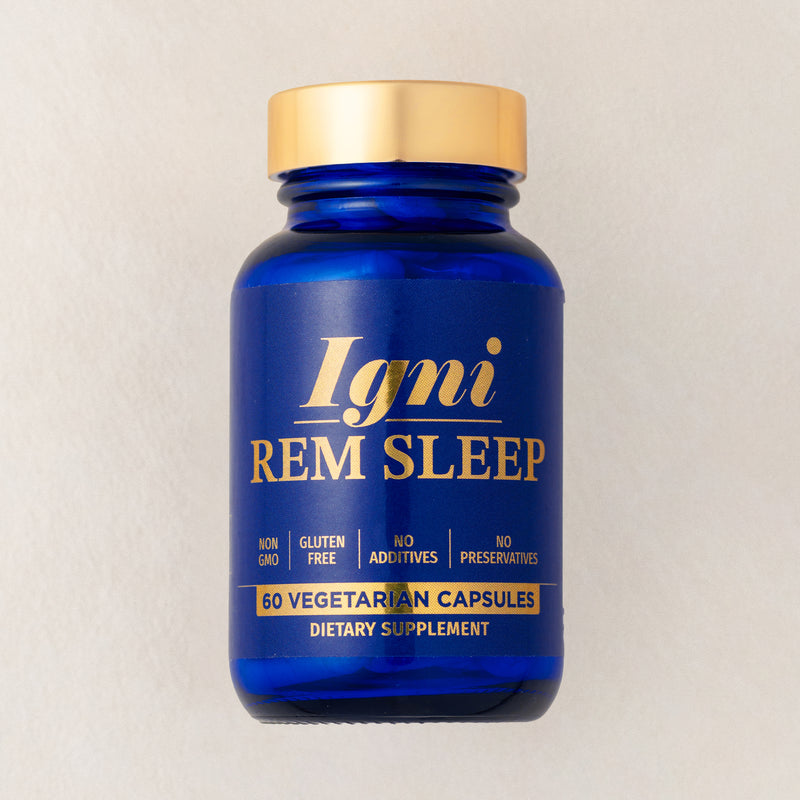
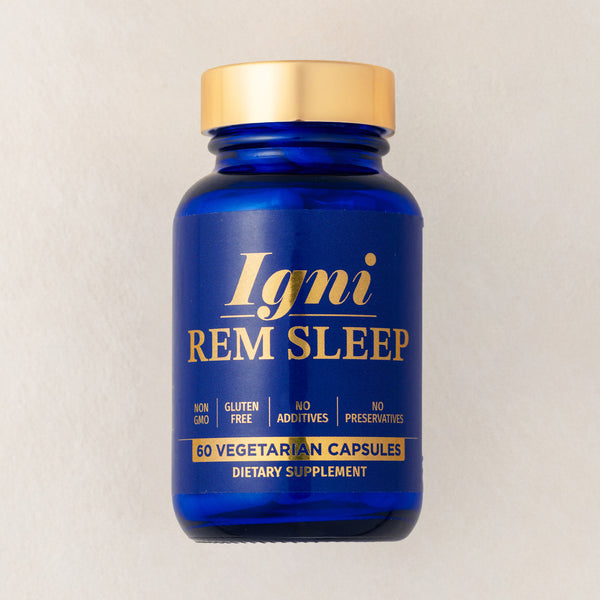
IgniREM Sleep™
Charged sleep nutrients, tested against placebo in adults 40 to 76. Fall asleep, stay asleep, and wake up like yourself.
While you sleep
Sleep isn't one long switch-off. Your brain runs four to six cycles a night, each with its own job. Scroll, and watch a typical night unfold.
First hours
Mostly in the first half of the night. Your body does its physical repair and releases growth hormone, and the brain's overnight cleanup is at its busiest.
All night
About half the night. Heart rate and breathing slow, your temperature drops, and the brain begins filing away the day.
Toward morning
Each REM period runs longer than the last, so most of it comes in the final hours. Vivid dreams, memory and mood all lean on it.
Between cycles
Waking for a moment between cycles is normal, and most of it you won't remember. What counts is falling back asleep quickly.
The sleep card game
Eight things most of us believe about sleep. Tap your answer, flip the card, and see how you do.
Card 1
Older adults need less sleep.
The answer: False
Adults of every age need about 7 to 9 hours (7 to 8 after 65). What changes with age is how light and broken that sleep gets, not how much you need.
Card 2
A nightcap helps you sleep better.
The answer: False
Alcohol can help you drift off, but as it wears off it breaks up your sleep and cuts REM in the second half of the night.
Card 3
Most vivid dreaming happens in REM sleep.
The answer: True
REM is when the most vivid dreams happen, and it gets longer toward morning. It's also when the brain sorts memories and feelings.
Card 4
You can fully catch up on lost sleep at the weekend.
The answer: False
A lie-in helps a little, but it doesn't erase a week of short nights, and it can shift your body clock so Sunday night is harder.
Card 5
Waking up briefly during the night is normal.
The answer: True
Everyone wakes briefly between sleep cycles, several times a night, and most of it you never remember. Falling back asleep quickly is what matters.
Card 6
Your body temperature drops to help you fall asleep.
The answer: True
Your core temperature falls by about 2°F at night. A cool bedroom, and a warm bath an hour or two before bed, both help it along.
Card 7
Loud snoring is always harmless.
The answer: False
Often it is, but loud snoring with gasps or pauses in breathing can be a sign of sleep apnea. That's worth a conversation with your doctor.
Card 8
Bright screens before bed can delay sleep.
The answer: True
Bright light in the evening, especially from a screen held close, holds back melatonin, the hormone that tells your body it's night.
Why it helps
Nothing here knocks you out. Each ingredient supports a step your body already takes on the way to deep, restoring sleep. Tap a star to see its job.

The temperature cue
Supports the drop in core body temperature that comes with deep sleep.
The raw material
The amino acid your body turns into serotonin, and then into melatonin, your night-time signal.
The shortcut
One step closer to serotonin than tryptophan, so the body has less work to do.
The brake
The brain's main calming messenger, supporting the shift from busy to restful.
The settler
Supports GABA activity and a relaxed, unhurried nervous system.
From skullcap
A flavonoid from Chinese skullcap that supports GABA receptor activity.
From chamomile
A plant flavonoid, best known from chamomile, studied for its role in sleep, particularly REM.
The stress buffer
Supports a healthy cortisol response, so the body's stress signal can wind down at night.
✦ Every ingredient is charged with Igniton's proprietary process before it goes in the capsule.
Tap another star to compare.
21-day study: 60 healthy adults aged 40 to 76, half taking IgniREM Sleep and half a placebo.
Real sleepers
Verified IgniREM Sleep customers, in their own words.
This stuff really works. … I only have to take one capsule and I get 5-6 hours of good sleep and even in the early morning hours when I used to be tossing and turning, I'm able to get back to sleep.
Works like magic on the nights I take these! Tried skipping and definitely don't sleep quite as well without them.
I’ve been using Igni REM Sleep™ for about a month, and I’m so happy with it! I’m sleeping better and waking up feeling more refreshed. I especially love starting my mornings with a clearer head and steadier energy.
I'm almost one month in using IgniREM Sleep and I've been sleeping really good. No longer am I waking up tired, I'm actually waking up refreshed for the first time in a while. Can't wait to see the benefits after I keep using this.
My sleep has gotten much better since I started taking IgniREM sleep. some of my dreams were a bit weird initially but it got better after about two weeks.

| Fall asleep quickly on waking | Morning weakness | Sleep interruptions |
|---|---|---|
| 11X** | -92%** | -54%** |
| IL-6 | CRP | GGT | Blood Pressure |
|---|---|---|---|
| 37%** | 28%** | 13%** | 9%** |
| Fall asleep quickly on waking | Morning weakness | Sleep interruptions |
|---|---|---|
| 11X** | -92%** | -54%** |
| IL-6 | CRP | GGT | Blood Pressure |
|---|---|---|---|
| 37%** | 28%** | 13%** | 9%** |
Free · 22 pages
The plain-English guide to why sleep changes after 40, what's behind the 3 am wake-ups, and what you can do about it tonight.
Keep the same wake-up time every day, weekends included. It anchors your body clock more than bedtime does.
A cool bedroom, around 65°F, helps your body drop into deep sleep.
Dim the lights an hour before bed. Bright light, from screens especially, tells your brain it's still day.
Skip the nightcap. Alcohol may help you nod off, but it breaks up sleep and cuts REM later in the night.
Awake for more than 20 minutes? Get up, keep the lights low, and go back when you feel sleepy.
Morning daylight, even 10 minutes, helps you feel sleepy at the right time that night.