
Still Foggy, Years After COVID?
Many adults quietly admit their thinking never fully came back. A randomized controlled trial measured this exact population for 60 days — and the group that needed help most responded hardest.
- Brain fog that outlasts the infection is real — one of the most commonly reported lingering complaints.
- A 60-day placebo-controlled trial of 70 adults measured memory and attention in exactly this population.
- The post-COVID group showed the largest measured response — the full data is below, with the published PDF.
- At the end: a free 3-minute test to baseline your own memory — so whatever you decide, you decide with a number.
Measured recovery over 60 days**
The hardest symptom to explain was the one nobody could see.
You got better. That's what the test said, anyway. The fever passed, you went back to work — and somewhere in the months that followed, you noticed the thing you couldn't quite name: you were still you, just a half-second slower.
If that's familiar, here's the sentence too few people said out loud: you're not imagining it.
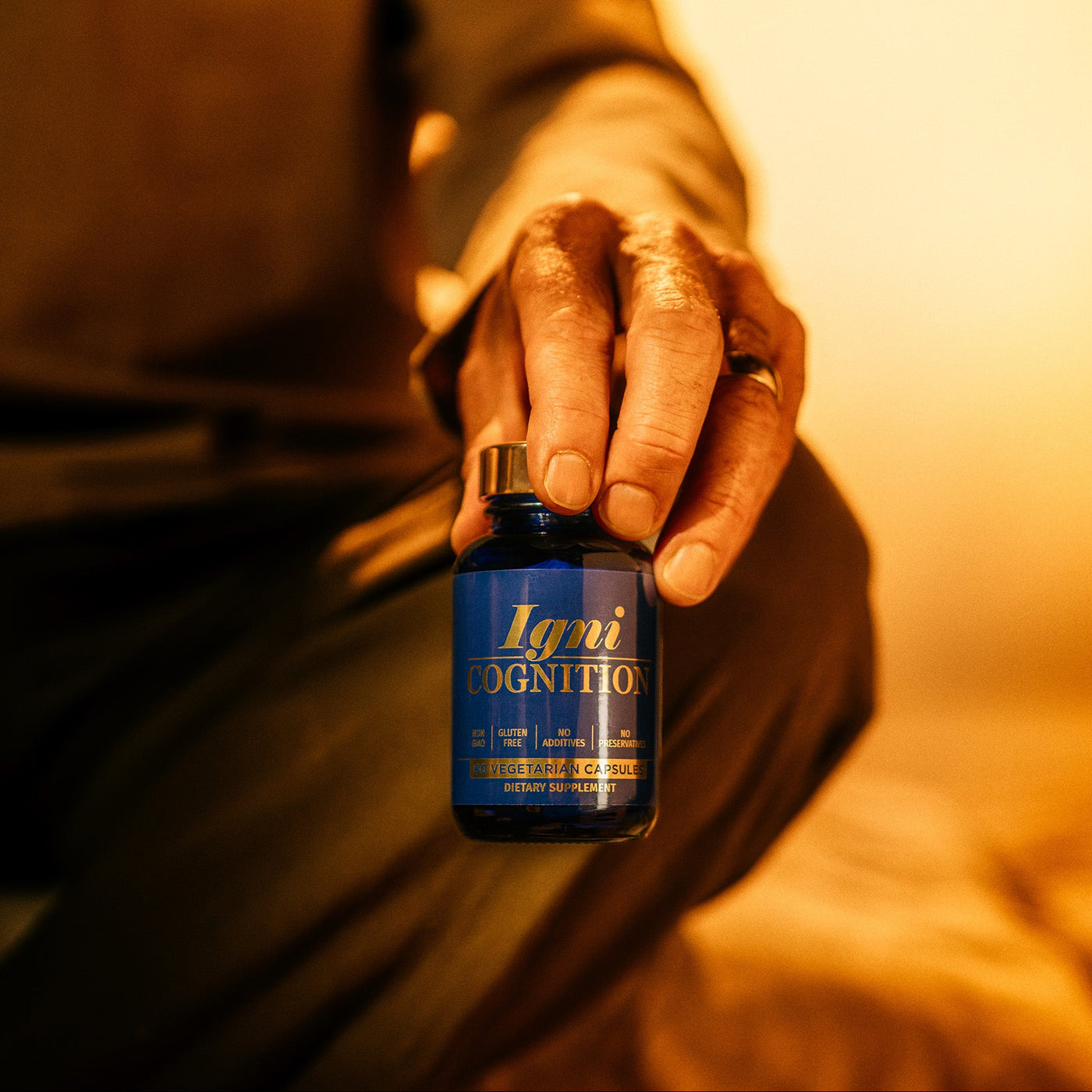
"Fine" on paper. Slower in the room where it counts.
Part 1 · The runaround"Your labs are normal"
Brain fog became one of the most commonly reported lingering complaints of the post-pandemic years — and one of the least satisfying to seek help for. You describe the slowness, the word-hunting, the fatigue behind the eyes. The bloodwork comes back fine.
Everyone's relieved except you. "Fine" wasn't the question.
So most people did what capable people do: they compensated. More lists. More reminders. More coffee — which sharpened the morning, then billed for it at 3pm. They worked around the fog and called it the new normal.
Here's the problem with "the new normal": it compounds.
None of this is destiny. It's a trendline — and trendlines bend.
The slowness wasn't a character flaw, or aging arrived early. It was a measurable change — which means it could be measured back.
Part 2 · The trialWhat 70 adults showed researchers
In a 60-day randomized controlled trial, researchers measured exactly this population. Seventy adults, ages 35–65, three groups — assessed with standardized memory and attention tests at Day 0, 30, and 60:
The compounds weren't exotic — citicoline, Alpha-GPC, phosphatidylserine, N-acetyl L-tyrosine, CoQ10, NADH. Substrates the brain uses for neurotransmitter production and cellular energy, studied for decades.
Both formula groups improved. The result that made the study worth publishing: the post-COVID group improved the most.
** Results from a 60-day randomized, placebo-controlled trial (n=70, ages 35–65) measuring standardized memory and attention assessments; figures shown for the Igniton-enhanced post-COVID cohort. Verify all figures against the published PDF linked below. Individual results vary.
Part 3 · The unusual partSame ingredients. Different results.
A fair reader should be skeptical of supplement studies — most are run by nobody, on nothing, against nothing. The design here is the difference.
The ingredients had been processed through Igniton's patented enhancement. And in the company's foundational 90-day trial (80 adults, Concordia University), the enhanced formula was tested against its own twin — identical molecules, identical doses, without the enhancement. The data, not a theory, makes the comparison:
Cognitive improvement at Day 90**
unenhanced
Relative pattern across the trial's cognitive measures — bar heights illustrative. Exact figures per measure are in the published PDF below.
The enhanced version outperformed on every measure, at every checkpoint.** You don't have to accept any theory about why. The trial was built so the comparison answers instead of the marketing.
And there's a third layer of proof that doesn't require trusting a PDF at all: your own score.
Run the experiment on yourself.
Two minutes, two parts. Baseline today — retest on Day 30 and compare the number, not the feeling.
Memorize 6 words.
You'll see six words for 15 seconds. Then pick them out of a grid of twelve. Ready?
15s remaining
Tap the 6 words you saw.
Hold this number.
It disappears in 4 seconds…
Type the number.
Where should we send your Day-30 retest?
We'll save today's score and email your retest link in 30 days — numbers, not impressions.
If the fog sounds like yours
The formula from both trials is sold as IgniCognition™ — two capsules each morning. No stimulants, no crash, no cycling. It works alongside coffee rather than replacing it, and the first measurable window in the published research landed at Day 30.
The trial formula, with the trial's own checkpoint built in
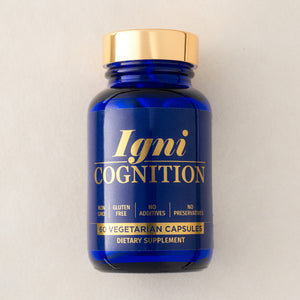
If your number doesn't move, the refund is yours. No hoops.
30-day money-back guarantee · Free US shipping on 2+ bottles
The fog arrived without asking. Whether it stays is, at least in part, now a measurable question.
Sponsored content. This article is published by Igniton and discusses Igniton's own products and research.
** These statements have not been evaluated by the Food and Drug Administration. IgniCognition is a dietary supplement and is not intended to diagnose, treat, cure, or prevent any disease, including COVID-19 or post-COVID conditions. Study results describe measured cognitive performance in trial participants; individual results vary. The in-article memory test is a self-assessment tool, not a medical or diagnostic instrument. If you are experiencing persistent cognitive symptoms, consult your healthcare provider. If pregnant, nursing, or taking prescription medication, consult your doctor before use.